
The Conspiracists

It fits the pattern of conspiratorial thinking, where if you have a conclusion that you already hold on to, anything else can be confirmatory evidence.
—Yini Zhang, University of Buffalo (cited in “QAnon Faithful See Validation…”)
What kind of person actually believes in conspiracy theories?
As I’ve written before, probably my favorite unit as an English and research teacher was one on conspiracy theories, misinformation, and disinformation, which my friend Taryn Auerbach and I developed several years ago.
The most fun idea in the unit was Taryn’s: we had students research their own conspiracy theories and then find credible sources to either “confirm” (credibly support) or “debunk” (show that there was a lack of evidence to support them).
The reason we framed it this way is that conspiracy theories, by their nature, often can’t be solidly proven or disproven.
Conspiracy theories aren’t “theories” in the scientific sense, because they don’t arise from what we already know, and are often structured so that they cannot be invalidated by new information.
A theory is essentially an educated inference which the person making the inference plans to rigorously challenge. The process of challenging a theory makes an explanation for a phenomenon or an answer to a question stronger by attacking it from as many angles as possible. A theory is falsifiable or testable.
A conspiracy theory is like a theory in reverse, a belief that walls itself off from evidence that can challenged it, while taking in only such real and imagined factual evidence as might make it seem stronger from the outside. If a theory is a changing and evolving organism, a conspiracy theory is a hollow fortress.
A conspiracy theory is not a theory in the sense described above, because it is designed— sometimes intentionally— not to be falsifiable or testable.
If you believe the United States faked the moon landing, for example, documentary evidence appearing to show NASA astronauts did land on the moon— rock samples, photos of astronauts on the moon, live video broadcasts from the era— just “prove” that the coverup to create the appearance of a moon landing was a massive coverup that had to have involved the United States government.
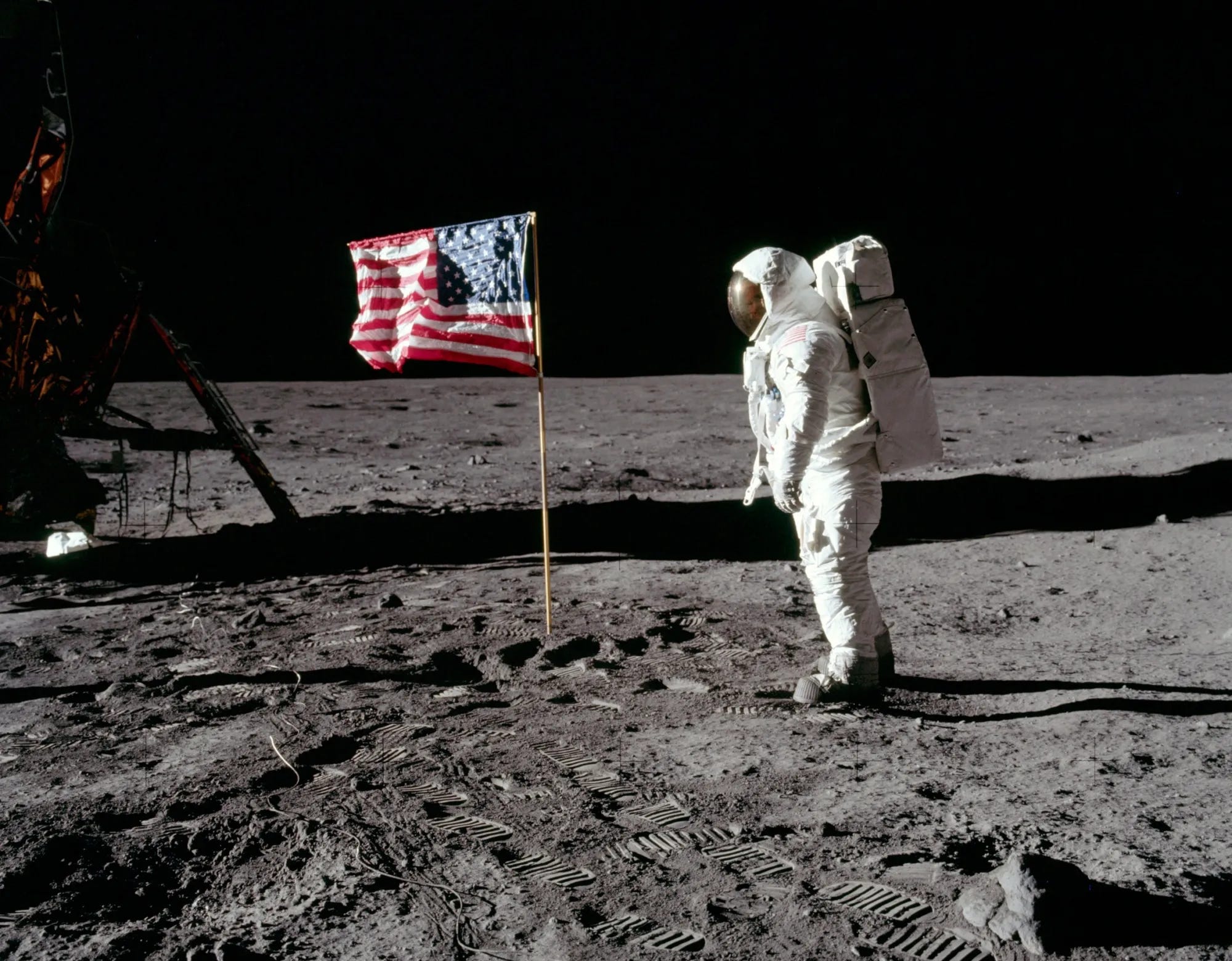
Any new evidence to the contrary can be explained as part of the conspiracy.
For example, a popular mutation of the faked moon landing theory is that the filmmaker Stanley Kubrick created the footage of astronauts on the moon in a studio on Earth. This may be a response to critics of the theory arguing that faking a nationally televised landing with 1960’s-era film techniques would be incredibly difficult.
Conspiracists could point to the incredible technological advances of Kubrick’s 2001: A Space Odyssey to argue that it might be possible for Kubrick, an argument which would allow them to avoid proving that Kubrick actually did any such thing.
Several articles we read with our students about conspiracists and their psychology contained an essential finding of existing psychological research.
Research suggests people don’t believe in conspiracy theories because they are stupid (which unfortunately also means we may not be able to “educate” people out of being conspiracists in the sense of giving them more information); they are much more often anxious, unsafe, or disenfranchised.
In other words, conspiracists are often people who have something to gain from believing that a coordinated conspiracy is responsible for what is wrong with the world, rather than simple bad luck, unfairness, randomness, or everyday corruption.
It’s essential to understand the nature of conspiratorial thinkers because anyone is theoretically capable of conspiratorial thinking, particularly during times of upheaval, combined with unprecedented misinformation and disinformation driven by easy access to online resources, by AI, by deepfake technology, and by the self-perpetuating engines of anxiety and outrage.
Having lots of information can feed a conspiratorial narrative. Having a powerful imagination can add fuel to the fire of powerful stories, filling in gaps and explaining away inconsistencies. Having intense, out-of-control feelings can make an explanation that restores a sense of coherence or safety deeply seductive.
And either a legitimate belief in conspiracy theories and/ or a cynical perception of their power over others seem to power many of our most significant political narratives.
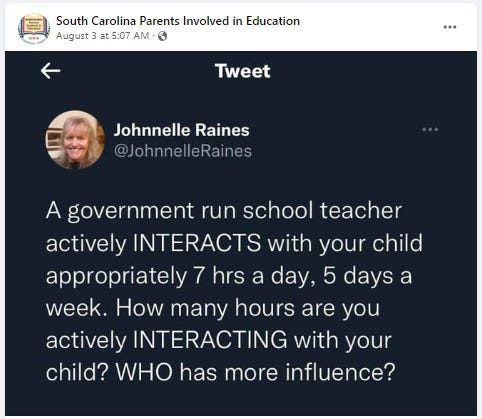
Project 2025, Moms for Liberty, the anti-LGBTQ+ Alliance Defending Freedom, the Freedom Caucus, and many other American reactionary movements derive much of their emotional heft from the idea that “government schools” are brainwashing students into being transgender, or “woke,” against the will of their loving (and straight, cisgender, predominately white, Judeo-Christian) families.
The January 6 insurrectionists subscribed to the idea that a legitimate election had been “stolen” from President Trump. Many of the insurrectionists had subscribed to even more emotionally powerful QAnon conspiracy theories that, like many of our most compelling conspiracy narratives, derive their power from a belief in hideous, abstract threats against “:our children” (while also making it harder in many cases to address real, concrete threats against actual children).
And, in turn, new conspiracy theories arose in the wake of January 6 to help “explain” how such an unprecedented event could have happened. These conspiracy theories helped provide the rationale for Trump’s eventual pardoning and commuting the sentences of around 1,500 January 6 insurrectionists, including rioters who went on to commit further violent crimes, including sexual crimes against children, conspiracy-driven violent threats against lawmakers, and additional violent attacks on law enforcement.
Similarly in some ways, after the apparent assassination attempt on then-candidate Trump during the last presidential campaign, many in the political center and on the political left (as well as some on the right, and even some sympathetic to the QAnon movement) embraced the idea that Trump and his supporters had conspired to fake the attempt (an attempt that was caught on video and from multiple angles, and which ended with a dead gunman and several additional victims).
While perhaps not as outlandish as the more elaborate QAnon theories, this conspiracy theory about a faked assassination attempt seems to have been driven by an emotional inability to reconcile evidence of Trump’s unpopularity, criminality, and crudeness, with the reality that under our existing electoral college system, he did outperform Kamala Harris in the contest. And the conspiracy theory, like other conspiracy theories, often relied on ignoring even the limited facts that were available at the time.
There may have been legitimate questions raised by the shooting, like, how did the Secret Service miss the shooter’s entrance? How was Trump able to create such a perfect photo opportunity during a truly chaotic moment?
But obviously these questions cannot only (or even most plausibly) be answered by the “theory” that the whole thing was staged, and any legitimate theory that it was staged would have to be tested by new and existing evidence.
Certainly, it may be possible to fake an assassination attempt (world governments, including the US government have done stranger things).
Butto my mind, there are at least questions anyone trying to apply rational thinking to a new idea or explanation with real stakes that has not already been proven to be accurate.
What credible information, if any, do I currently have?
Based on that information, what logical explanations could I infer?
Am I willing to test those explanations with as much additional credible/ plausible information as possible?
I think that lest step is the biggest ask.
It certainly was for our students, but it’s hard for researchers, too. Confirmation bias, the tendency to look for and overvalue evidence that supports a theory, while overlooking evidence to the contrary, is a powerful obstacle to clearly seeing the full picture when conducting research.
Even as someone who enjoys research, who enjoys asking questions, and who is naturally a little wary of easy explanations and accepted “truths,” sometimes I just don’t have the energy it takes to keep asking and seeking.
Particularly when initial efforts seem to confirm what our emotions already want to be true, it can be difficult, and sometimes extremely anxiety-provoking, to keep chipping away at our own beliefs.
For example, perhaps you have long felt that something was off or unfair about your experiences with your child’s school— perhaps your own experiences in school were distressing or painful.
A member of an online group of likeminded people invites you to join.
Other people share your feeling of unease, and some of them can put words to the feelings, and even offer explanation for that ease, often tied to evidence.
An out-of-context video, in this hypothetical scenario, shows a school board member read from a book about “antiracism” that says the only way to address racism is through “discrimination” against White students or other racial majorities. Your new friends and acquaintances explain that the board member is promoting a radical kind of “reverse racism” against students who look like your student.
Could this explain why your student doesn’t seem to be getting the treatment you believe they should? Such a thought could naturally provoke feelings of outrage, anxiety, or even fear. These feelings might make it harder to step back towards objectivity.
Still, you might look into this concern in a rigorous way— maybe you recognize that claims about a conspiracy to disenfranchise White students or other demographic groups could cause real harm to social institutions, to the careers of administrators and educators, to the relationships in your community. You could find the original video of the entire board meeting, which is publicly available, and watch at least the entire remarks of the Board member.
Maybe you find out that the board member was closely paraphrasing a part of African American studies expert and author Ibram X. Kendi’s frequently-banned book How to Be an Antiracist. Maybe you also find out that, in the context of the quote— which turns out to be more of a paraphrase— the board member was not actually taking a position on whether Kendi was correct, but introducing Kendi’s thoughts, along with the thoughts of others, to try to illustrate the different perspectives on how to address the district’s disproportionately low test scores among Black male students.
Maybe you go even a further step and look at data available on the Department of Education website that shows that, in fact, Black male students are scoring disproportionately lower than other students in the district. (You might go an even further step and read a report from the State Department that acknowledges some statistical biases in the test being used against Black male students.)
Perhaps you take the even more unlikely step of reading longer passages from Kendi’s book, as well as from the other books the board member quotes. Perhaps you don’t agree with everything you read, and don’t necessarily agree with the board member’s framing, either. But you also know now that it wasn’t true that the board member (or Kendi) was arguing for racial prejudice against students, as the social media group argued, or that the board member was presenting Kendi’s argument as the only one to consider.
The simple narrative is no longer possible to support. And now, perhaps, though you know, rationally, that it’s good to have a clearer idea of what’s going on, you have legitimately lost something of value: the feeling that you understood what was happening. That you knew who you could go to with your concerns, that perhaps your anxiety and even anger were justified. That your new friends and acquaintances had your back and were offering you a solution.
This emotional resonance may be the reason conspiratorial thinking has become so mainstreamed.
During the past week’s congressional hearings, which led up to President Trump’s announcement she would be removed from her office, DHS Secretary Kristi Noem repeatedly explained away news outlets that reported negatively on her actions (including the conservative- leaning Wall Street Journal) as “tabloids”.
Despite this, many strong proponents of ICE, like North Carolina Senator Thom Tillis, called Noem’s performance as Secretary disastrous.
While it’s hard to argue with this assessment, it may also be, itself an example of the appeal of conspiratorial thinking: making Noem a scapegoat creates an easy narrative of incompetence that doesn’t necessarily have to deal with legitimate challenges to the policies on immigration coming from this administration. Tillis and others continued to support the underlying premise that has driven Noem’s tenure: the belief that US crime is being significantly driven by an influx of “illegal criminal aliens”.
For example, Tillis said during his questioning of Noem, “So why am I disappointed with Secretary Noem? Because we're not going after enough people who did this damage at the expense of running numbers that Stephen Miller wants out of the White House.”
By referencing “people who did this damage,” Tillis relied on an implicit assumption, which he did not support, that there are a significant number of undocumented immigrants in America who are driving crime in such a way that federal immigration policy should be focused on arresting them. He did not test his theory about the cause of crime with evidence that could help support or debunk it.
Existing data does not support this assumption.
The National Institutes of Justice, for example, found that “undocumented immigrants are arrested at less than half the rate of native-born U.S. citizens for violent and drug crimes and a quarter the rate of native-born citizens for property crimes”. Similarly, the authors of a study in the peer-reviewed journal Criminology found that immigrant status actually tended to have a “negative” correlation with violent crime (meaning that, statistically, immigrants were less likely to commit crimes than native-born Americans.
As those same authors put it,
Debates about the proper role of undocumented immigrants in U.S. society will no doubt continue, but they should do so in light of the available evidence. For this reason, any set of immigration policies moving forward should be crafted with the empirical understanding that undocumented immigration does not seem to have increased violent crime.
In fact, Representative Ted Lieu cited a similar study from Stanford explicitly during his questioning of Noem. Noem nonetheless went on to repeat claims about violent “illegals” driving crime to support her arguments throughout the hearing.
Verifiable facts and testable theories often make policy decisions more complicated.
For instance, there may be other arguments against various policies promoting or discouraging (or regulating, or deregulating) immigration, but they may be based on less accessible or more-difficult-to-parse data. (Or they may, of course, be bad-faith claims that are not based on data at all.)
It’s easy, in terms of crafting an argument, to rely on the idea that immigrants (or teachers, or “woke leftists,” or whoever) are inherently dangerous, but for proponents of severe restrictions or enforcement, it might be emotionally difficult to accept that existing crime statistics don’t support that idea, and that they must choose among the following: changing their position, considering additional evidence beyond crime statistics, or (the conspiratorial thinker’s route) refusing to accept the evidence in front of them (perhaps by selectively declaring every source of that evidence not credible).
The truth is often more complex than a story, and conspiracy theories are not theories, they are stories. Perhaps the most important strategy in not having our rational brains hijacked by conspiratorial thinking is accepting that we are not immune.
The conspiracists can easily be us.